This is a subtitle for your new post
When your suspension is healthy, the car feels stable, quiet, and predictable, even on rough roads. When it starts to wear out, the changes can be sneaky at first, then suddenly you realize the ride has become harsh, floaty, or noisy. Those changes are not just comfort issues, they can affect how well the vehicle steers and stops.
Here are six common signs your suspension needs attention sooner rather than later.
1. Clunks or Bangs Over Bumps
If you hear a solid clunk or bang every time you hit a pothole, speed bump, or driveway lip, the suspension is trying to tell you something. That impact noise often comes from worn control arm bushings, loose sway bar links, or ball joints that have too much play. Instead of guiding the wheel smoothly, those parts are letting it jump around and slam against its stops.
Typical causes of clunks include:
- Worn or torn rubber bushings that no longer cushion movement
- Sway bar links with loose joints or broken studs
- Ball joints that have lost grease and developed internal clearance
Left alone, those clunks usually get louder and can eventually turn into serious steering or alignment problems.
2. Squeaks and Creaks When Turning or Parking
Slow-speed squeaks and creaks, especially when you turn the wheel or pull into a parking space, point to rubber and metal parts that are no longer sliding smoothly. Strut mounts, control arm bushings, and steering components all twist under load when you steer or climb an angled driveway. As the rubber dries and cracks, or as metal surfaces lose lubrication, they start to complain.
You may feel a slight binding or notch in the steering along with the noise. At first it can be more annoying than dangerous, but those same worn parts often develop play later, which affects tire wear and straight-line stability. A technician hearing these noises on a test drive will usually check mounts and bushings closely before they fail outright.
3. Excessive Bouncing After Speed Bumps or Dips
Shocks and struts are supposed to control how quickly the body settles after a bump. When they are worn, the vehicle can feel like it is on a pogo stick. You might notice the front or rear end bouncing several times after a dip in the road or a railroad crossing instead of taking one firm up and down movement.
On a simple test drive, pay attention to:
- How many times the body bounces after a big bump
- Whether the front end dives hard under braking
- If the rear squats dramatically when you accelerate
If the vehicle keeps bobbing or feels like it never fully settles, the dampers are likely tired. That extra movement makes it harder for the tires to stay planted, which can increase stopping distance and reduce confidence in corners.
4. Steering Feels Loose, Wanders, or Fights You
Loose or wandering steering often means suspension wear, not just a steering problem. Worn tie rods, ball joints, or control arm bushings let the wheels change direction slightly on their own. At highway speeds, that can feel like the car wants to drift out of its lane or reacts more than you expect when you correct.
Sometimes the steering wheel develops a “dead zone” where you can move it a bit before the car responds, which is a sign that joints in the steering linkage are no longer tight. We often find that several parts are moderately worn at once, and together they add up to a steering feel that keeps you working harder than you should just to stay straight.
5. Uneven Tire Wear and a Crooked Steering Wheel
Your tires can tell you a lot about suspension health. When bushings, ball joints, or struts wear out, the alignment changes, and the tread pays the price. You might see:
- Inside or outside edges worn much faster than the center
- Feathered tread blocks that feel sharp in one direction and smooth in the other
- A steering wheel that sits off-center even on a straight road
Those patterns usually mean the wheels are no longer held in the correct angles as you drive. Many drivers replace tires without addressing the underlying suspension wear, only to see the same wear patterns return. Catching this early can save a set of tires and prevent handling problems in the rain.
6. Vehicle Sits Uneven or Feels Like It Leans in Corners
If one corner of the vehicle looks lower than the others, or the car feels like it leans more than it used to in turns, the springs or struts may be giving up. Coil springs can sag with age, and worn struts or shocks no longer support the body properly. You may notice the vehicle bottoms out over dips that it handled easily in the past.
That uneven stance does more than hurt appearance. It shifts weight onto certain tires and suspension parts, which accelerates wear and can make the car less stable in emergency maneuvers. If a vehicle leans, squats, or drags more than you remember, it is time to treat it as a red-level concern and have the suspension inspected promptly.
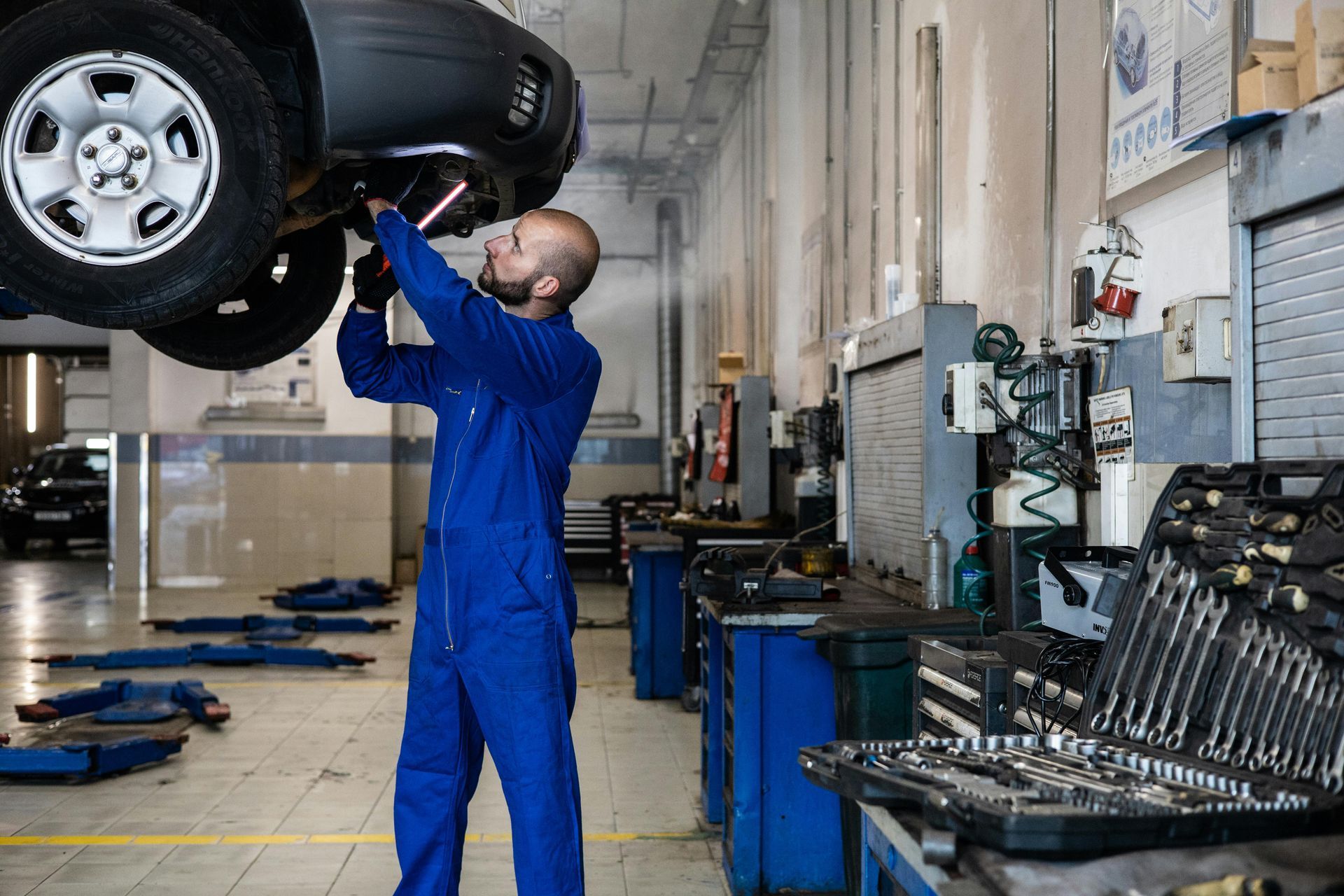
Once any of these signs show up, the safest approach is a full suspension and steering inspection instead of guessing at a single part. A technician can check for play in joints, look for cracked bushings, measure ride height, and evaluate shocks and struts. Fixing issues while they are still in the early stages usually costs less and keeps the vehicle riding safely and comfortably.
Get Suspension Repair in Wilmington, NC with GarageFellas of Wilmington
We can road test your vehicle and perform a thorough suspension and steering inspection to pinpoint what is causing the noises, bounce, or loose feel. We explain what is worn, how urgent it is, and the most sensible repair plan so you can get back to a stable, quiet ride.
Call
GarageFellas of Wilmington in Wilmington, NC, to schedule your suspension check and keep your car safe and predictable on every trip.